Making Money With a Van in Auckland: Licences, Liability and What a Moving Job Pays
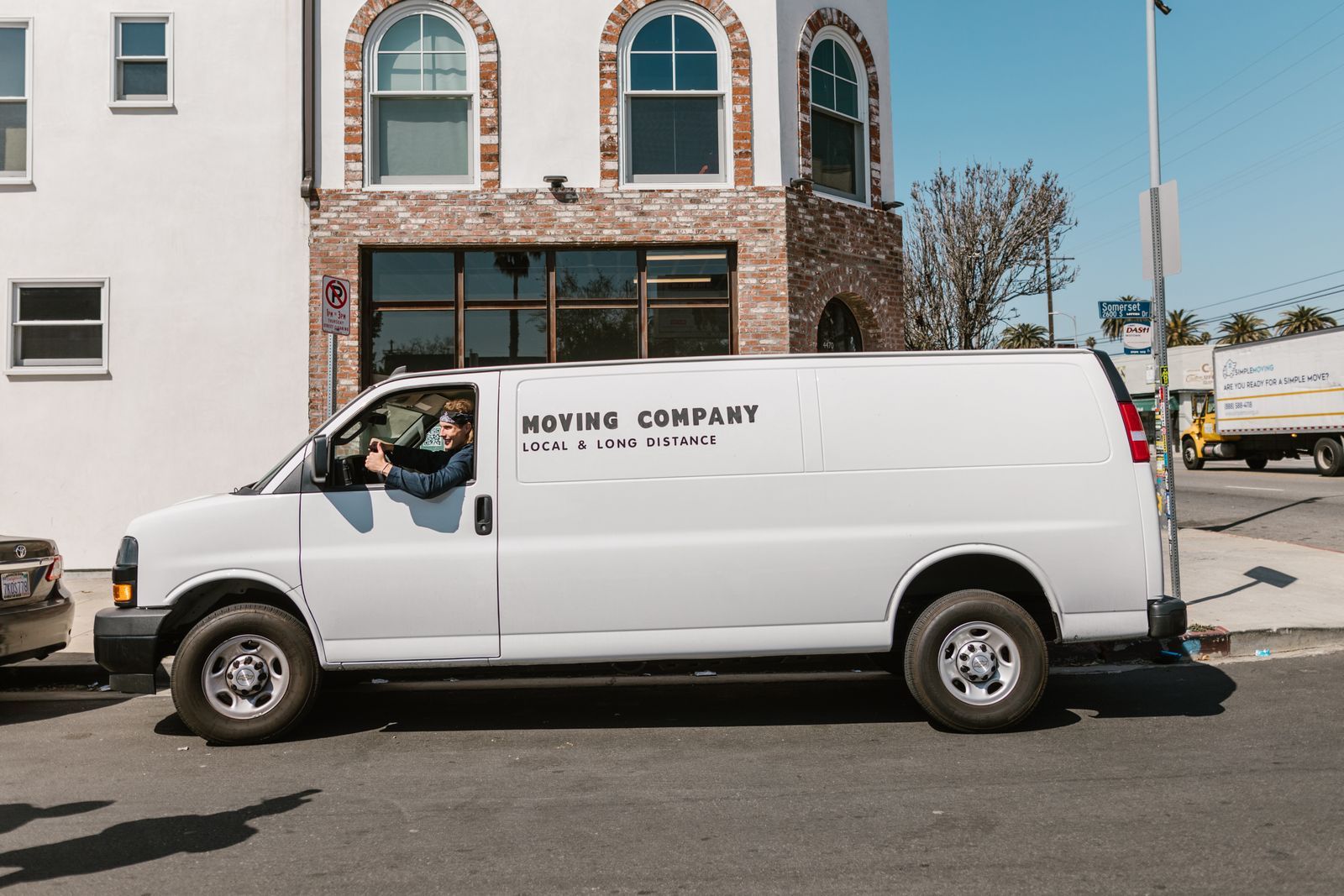
If you own a van, or you're thinking about buying one, moving work is one of the quickest ways to turn it into income in Auckland. People move every week of the year, plenty of jobs are too small for a removal company, and an hourly rate for one person and a van starts at about $40 to $60.
Most "start a man and van business" guides are written for the UK, where operator licences and goods-in-transit insurance are standard topics. New Zealand's rules are different. In some ways they're easier: in most cases you don't need a licence at all. In other ways they're stricter than people expect, because New Zealand law makes you liable for your customers' belongings by default, whether or not the damage was your fault.
This guide covers the licence question, that liability, the insurance gaps it exposes, and what a small moving job leaves you after the van has been paid for. We're Servy, an Auckland booking app for movers, cleaners and lawn and garden providers. Where we describe Servy, the terms come from our moving help provider FAQ. Everything else is linked to its source.
Do you need a licence to carry goods for money?
For a van, no. Under the Land Transport Act 1998, you need a transport service licence to run a "goods service", and the Act defines a goods service as carrying goods on a road "by means of a motor vehicle whose gross vehicle mass is 6 000 kg or more". A Toyota HiAce, a Ford Transit or a ute with a trailer is well under that.
The same 6,000 kg line applies to your driver licence. As the Servy FAQ notes, a standard Class 1 car licence covers vans and light trucks under 6,000 kg gross vehicle mass. If you step up to a bigger truck, you need the matching heavy vehicle licence and, once you cross 6,000 kg, a goods service licence as well.
So the paperwork to start is short: your IRD number, a vehicle that's fit for the work, and the right insurance. The insurance is where most of the risk is.
You're liable for what you carry, even when it isn't your fault
When you carry someone's goods for payment, the Contract and Commercial Law Act 2017 applies to the job. It treats every contract of carriage as one of four kinds, and if nobody agrees otherwise in the right form, section 249 makes it a contract at limited carrier's risk.
Under limited carrier's risk, section 256 makes the carrier liable for loss or damage to the goods while they're in its care, "whether or not the loss or damage is caused wholly or partly by" the carrier. Section 259 caps that at $2,000 for each unit of goods. The defences in section 260 are narrow: things like inherent vice in the goods, or saving life or property in an emergency. A wardrobe that cracks because the customer's flatmate packed it badly is still yours to pay for under that section, up to $2,000.
Removal companies avoid most of this by contracting at owner's risk, which leaves them liable only for damage they cause on purpose. But section 250 sets strict conditions. The contract must be in writing, say it's at owner's risk and be signed by both parties, or the customer must separately sign a prescribed statement before the goods are loaded. And section 253 says the price must be lower than a limited carrier's risk job by an amount that's "fair and reasonable" for the risk the customer is taking on.
A job agreed in a Facebook Messenger chat meets none of those conditions. If you take moving work informally, you're carrying at limited carrier's risk on every job.
That isn't a reason to avoid the work. It's a reason to get the insurance right and to be careful how you load. Our customer-side guide to what movers owe when something breaks covers the other half of the law, including a Disputes Tribunal case where an owner's-risk contract didn't protect a mover who did a careless job.
Three insurance gaps to close before your first job
1. Your motor policy may not cover paid carrying. Private car and van policies often exclude it. Initio's motor vehicle policy, for example, gives no cover while the vehicle is used for "a courier or delivery business" or "to carry any goods or samples for financial gain or reward in connection with any trade or business other than farming". If you crash on the way to a paid move on a policy like that, the van may not be covered. Wording varies between insurers, so tell yours what the vehicle is for and get it in writing.
2. Public liability may not cover the customer's belongings. Liability policies usually exclude property in your "care, custody or control", which describes a van full of furniture. Some add a little back. The DUAL general liability wording sold through BizCover excludes property in the insured's care, custody or control, then has an extension that covers it up to $100,000 a year with a $1,000 excess. With a $1,000 excess, a broken $400 mirror or a $700 TV is paid out of your own pocket anyway. The same wording also excludes injury or damage arising from the use of a registered vehicle, which is what your motor policy is meant to cover.
3. The goods while they're on the road. The policy designed for the liability above is carriers' liability or goods-in-transit insurance. AMI's carriers transit liability wording is one example. It covers liability for accidental loss to goods you contract to carry while they're "in transit anywhere in New Zealand (including any loading and unloading)". Ask a broker whether it's worth adding for the jobs you plan to take, and what excess applies.
Public liability insurance is also what Servy requires from every provider before their first job. It covers damage to the customer's house as you carry things through it, such as a gouged doorframe or a dented wall. It won't cover everything on its own, which is why the other two policies matter.
What a job pays once the van is paid for
Auckland's market rates for a single operator are low. WiseMove lists $40 to $60 an hour for one person with a transit van, fully inclusive of fuel and GST, usually with a two-hour minimum. Our man-with-a-van cost guide compares several Auckland rate cards, and the two-hour minimum appears on all of them.
Here's an example of a typical small job: two hours at $50 an hour, $100 in total. You drive 10 km to the pickup, 15 km for the move itself, and 10 km back. That's 35 km.
Inland Revenue's kilometre rates for 2025/26 give two ways to cost those kilometres:
| Diesel rate per km | Cost of 35 km | Left from $100 | |
|---|---|---|---|
| Tier 1 (fuel, maintenance, insurance, registration and depreciation) | $1.30 | $45.50 | $54.50 |
| Tier 2 (running costs only) | $0.38 | $13.30 | $86.70 |
Tier 1 applies to the first 14,000 km a year and spreads the full cost of owning the van over each kilometre. If you bought the van for this work, it's the honest figure, and on a $50-an-hour job the van takes almost half. Tier 2 is closer to the extra cost of each job if you already owned the van for other reasons.
Then ACC takes its share. Furniture removal is in ACC classification unit 61100, road freight transport, with a 2026/27 work levy of $2.25 per $100 of liable earnings. Add the $0.08 Working Safer levy and $1.52 earners' levy and it's $3.85 per $100, plus GST (ACC Levy Guidebook 2026/27). The work levy alone is about 3.4 times the $0.67 median across ACC's classification units, and the total is well above a cleaner's $2.60. Income tax comes after that.
Three things follow from that table:
- Charge in hours, never per item. A two-hour minimum isn't greed. On a short job it's what pays for the van.
- Price for total time, not time on site. Every kilometre to the pickup and back is a cost, so a job across town at the same rate earns much less.
- Van-with-driver work pays better than labour-only for a reason. The higher price is carrying the vehicle's costs. If the gap between your van and labour-only rate doesn't cover your per-kilometre cost, you're giving the van away.
Auckland moving work is steady all year
Moving work in Auckland is steadier than the "summer moving season" talk suggests. We analysed 13 years of Tenancy Services bond data for our Auckland moving season report. Auckland averages between 4,466 and 5,486 new private tenancies a month, and February, the busiest month, is only 16% above average. July is 6% above average. That's rentals alone, before you count homeowners, students, people splitting up, and the furniture that someone bought on Marketplace and has to collect.
The weekly pattern is more marked than the monthly one. The Servy FAQ points out that move-in and move-out dates cluster around the end and start of each month, so keep those days open.
Where the work comes from, and what each source costs you
There are four usual ways to find moving work. Our guide to finding odd jobs in Auckland covers them in detail with sources. For a van owner they work out like this:
- Facebook and Marketplace. No fee. But every job is at limited carrier's risk, every price is negotiated, and a customer who cancels on the morning or doesn't pay costs you the slot and the drive.
- Airtasker. Plenty of moving tasks, but you bid against other Taskers, and new Taskers pay a 20% service fee until they earn enough to move up a tier. On a $100 job, that's $20 gone before you start the van.
- Builderscrack. Designed for trades with larger jobs. You pay tokens for leads whether you win the job or not.
- Your own website and ads. It works eventually, but it costs money and time before your first booking.
How Servy handles the problems a van owner runs into
Servy was built around the problems this kind of work involves. From the moving help provider FAQ:
Two ways in. You can sign up for labour-only jobs, loading a vehicle the customer has arranged, or van-with-driver jobs where you bring the van, or both. If you have a van, your profile is shown for the higher-value van-with-driver bookings as well as labour-only work.
No quoting or bidding. You see the location, scope and price of the job before you accept, and the customer has already seen and accepted that price. Customers list their items when they book, including heavy or fragile pieces, so you can turn down a piano or a pallet of tiles you're not equipped for.
Overruns. Time that runs past the estimated duration can be flagged through the app, so a "small one-bedroom move" with a garage full of extras isn't free labour.
Damage. Servy requires your own public liability insurance, and there's a dispute process where both sides can submit photos and their account of what happened. The FAQ recommends photographing valuable items before you start. That's also the best evidence you can have under the carriage rules above.
Cancellations and pay. A customer who cancels within 24 hours, or isn't there when you arrive, pays a fee equal to one hour of your rate, and part of it is passed on to you. Customers pay in the app, you keep 95% of every booking and all your tips, and payouts reach your bank through Stripe, usually within two to five business days.
On the per-job maths above, the gap between a 5% fee and Airtasker's starting 20% is $15 on a $100 job, which is more than the fuel for the move.
What Servy asks of you
You need to pass an identity and background check, hold New Zealand public liability insurance, and confirm your licence class during onboarding. Those requirements are why customers are happy to hand over their belongings to someone they've just met. Servy is newer and smaller than Airtasker, so it won't fill every day straight away, but every job through it keeps more of the money, and your ratings build up on your profile as the platform grows.
Where to start
- Apply to Servy. The background check takes a few days, so start now.
- Call your insurer. Get the van insured for business use and carrying goods for reward, and ask about carriers' liability cover.
- Get public liability cover. It's required before your first Servy job, and it covers the house you're working in.
- Kit out the van. Blankets, straps, a trolley and plenty of plastic wrap cost far less than one damaged dining table.
- Keep the end of the month free. That's when Auckland moves.
Sources:
- Land Transport Act 1998, s 2 (definition of goods service) and s 30J, New Zealand Legislation
- Contract and Commercial Law Act 2017, ss 248–260, New Zealand Legislation
- ACC Levy Guidebook 2026/27 (CU 61100 and levy notes)
- Kilometre rates 2025–2026, Inland Revenue
- Initio motor vehicle insurance policy NZ21/05
- DUAL NZ General Liability wording (BizCover)
- AMI carriers transit liability policy wording
- Man with a van Auckland rates, WiseMove
- Rental bond data, Tenancy Services
- Servy moving help provider FAQ