Overhanging Trees in Auckland: What You Can (and Can't) Legally Do
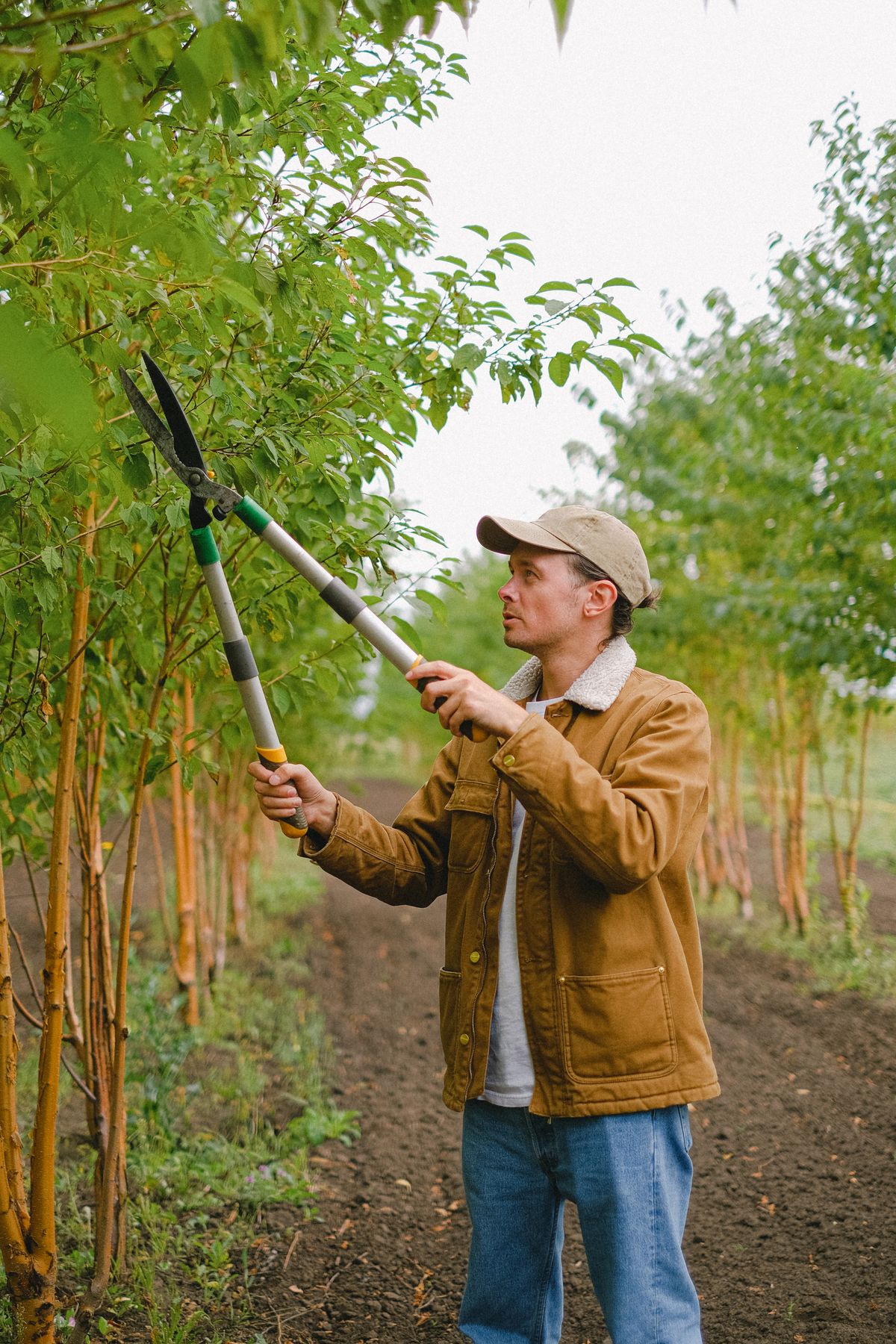
If a neighbour's branches or roots cross onto your section, you can cut them back to the boundary line yourself, without asking permission, and without going near a court. That part of New Zealand tree law is settled and most advice on it stops there. What gets left out is that this right runs in both directions: cut carelessly and kill or destabilise a tree that wasn't yours to begin with, and you can be the one facing a compensation claim. In Auckland, there's a second complication most general NZ tree-law guides never mention at all, because it's a local council rule rather than a national one: if the tree is on the Unitary Plan's Notable Trees Schedule, your self-help right to trim it can be overridden by a resource consent requirement, with fines running into six figures.
The self-help right, and its limit
You're entitled to trim back anything from a neighbour's tree, branches or roots, that has crossed onto your land, cutting only as far as the boundary. You can't reach over onto their side to do it, and you don't own what you cut off. The trimmings, and any fruit still on them, legally belong to the tree's owner, so the polite (and correct) move is to offer them back rather than binning or keeping them.
The part that trips people up is the standard of care that comes with that right. Cutting roots is riskier than it looks: sever the wrong ones and you can compromise the tree's structural stability or kill it outright, and your neighbour can claim compensation if that happens. The right to trim doesn't come with immunity for doing it badly. If a job looks big enough that you can't be confident about which roots or limbs are load-bearing, that's a reason to bring in an arborist rather than a saw.
When self-help isn't enough: the court order route
Self-help only solves problems you can literally reach with a pair of loppers. It doesn't help if a neighbour's tree is blocking your view, undermining your foundations, clogging your drains with leaf litter, or posing a real risk of harm, and it doesn't force your neighbour to do anything on their side of the fence.
For those situations, the Property Law Act 2007 gives the District Court power to order a tree trimmed or removed, and to order the tree's owner to pay for damage it's caused (sections 332 to 338). The court weighs specific harms, undue obstruction of view, damage or risk to property, drainage problems, interference with reasonable use and enjoyment of your land, against a proportionality test: it won't grant the order if doing so would cause your neighbour more hardship than leaving the tree alone causes you. If you get the order, your neighbour typically has 20 working days to comply before you can do the work yourself and recover the cost. You should know the current citation before raising this with a neighbour or a lawyer: the court-order power used to sit in section 129C of the Property Law Act 1952, and a fair amount of tree-dispute advice online still cites that old number. The 1952 Act was replaced in 2007, and the equivalent provisions are now sections 332 to 338 of the current Act.
Auckland's extra layer: protected trees
None of the above assumes the tree itself has any special status. In Auckland, plenty do. The Unitary Plan's Notable Trees Schedule lists trees, and some Significant Ecological Areas, that can't be removed, cut down, or significantly pruned without a resource consent, regardless of whose property they're standing on. Auckland Council is explicit that this covers the everyday version of tree work, cutting it down, working around it, trimming or pruning it, not just wholesale removal, because that work can still destroy or irreparably damage a protected tree.
This is where the self-help right runs into a rule most general NZ tree-law content never covers, because it's an Auckland Unitary Plan rule, not something in the Property Law Act. If your neighbour's overhanging branches belong to a scheduled tree, trimming them back to your boundary can require resource consent first, and doing the work without it risks a fine of up to $250,000 under the Resource Management Act. Before you cut anything from a tree you don't own, check the address against Auckland Council's Unitary Plan maps. It takes a few minutes and it's the only way to know whether you're dealing with an ordinary neighbour dispute or a protected one.
What this actually means for the average dispute
Most overhanging-tree situations in Auckland never need a court or a resource consent. A hedge that's grown past the fence line, a branch dropping leaves in your gutter, a root lifting a corner of the patio, these are exactly what the self-help right exists for: cut back to the boundary, hand over anything worth keeping, and don't touch roots you're not confident about. Talking to your neighbour first costs nothing and avoids a dispute over a job that was going to happen anyway. The court order process and the protected-tree rules exist for the harder cases, real structural risk, a genuinely blocked view, a tree that's on the schedule, not for a garden hedge that needs a trim. And if the disagreement is about the boundary itself rather than what's growing over it, the rules are different again — our guide to boundary fences in Auckland covers who pays and how tall you can build.
Servy's Lawn & Garden listings cover exactly this kind of routine trimming and tidy-up work. For anything bigger, a tree that's clearly affecting your foundations, drainage, or view, or one that might be on the Notable Trees Schedule, check the Unitary Plan and talk to an arborist before anyone picks up a saw.
Sources:
- Property Law Act 2007, ss 332–338, New Zealand Legislation
- Trees, Community Law Manual
- Working on or around protected trees, Auckland Council
- How to check the Unitary Plan to see if trees are scheduled, The Tree Council
- Don't forget your roots, Harkness Henry Lawyers
- Property Law Act 1952, s 129C (superseded), New Zealand Legislation