Pool Fencing in NZ: What Actually Counts as a Pool
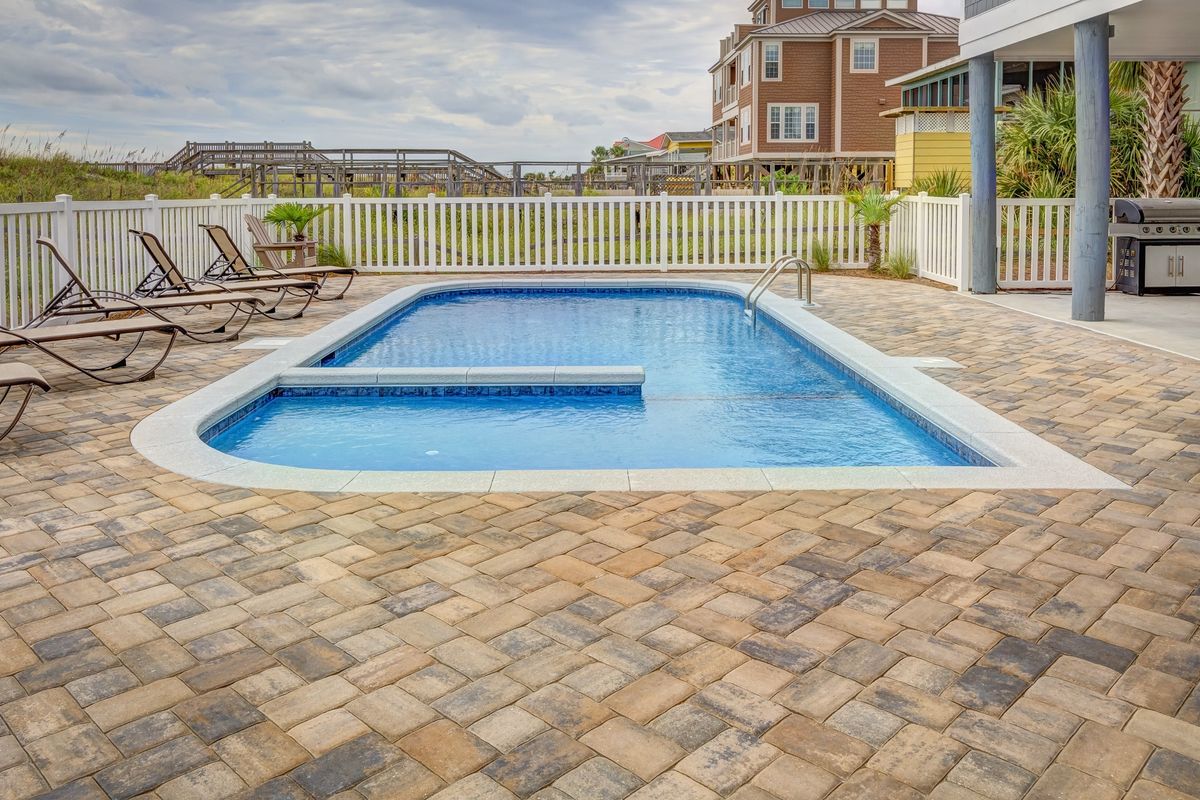
A $150 inflatable pool from Bunnings, filled to knee height for a few weeks over summer, meets the legal definition of a residential pool in New Zealand the moment the water passes 400mm deep. So does a portable spa sitting on a deck, or a garden pond dug a bit deeper than planned. None of these look like what most people picture when they hear "pool fencing law," which is exactly why Auckland Council has been warning about pop-up pools ahead of summer: the council now has more than 32,700 pools on its register, and it's the cheap, temporary ones bought without anyone thinking to check the rules that are driving the increase in noncompliant setups.
The 400mm rule, and what it actually catches
Section 162B of the Building Act 2004 sets the trigger with no ambiguity: the pool barrier rules apply to "pools with a maximum depth of water of 400 mm or more." Section 162A states the purpose directly, to prevent the drowning of and injury to children under 5 by restricting their unsupervised access. There's no carve-out for how the pool is built, how long it's staying up, or how much it cost. An inflatable ring pool holds that much water once it's a third full. A council can, and does, treat it the same as an in-ground pool for compliance purposes.
RNZ reported that Auckland Council's team leader for swimming pools compliance, Wayne Daniel, has been pushing this exact message ahead of summer, and pointed to a 2023 case where a 20-month-old, Aromaia Morehu Leoni Duff, drowned in a temporary pool with no barrier around it. Water Safety New Zealand's chief executive, Glen Scanlon, put the obligation bluntly for anyone who can't fence or empty a portable pool between uses: don't use them. Three young New Zealanders drowned in portable pools over the ten summers to 2025, a small number next to the total pool count, but each one is a pool that either had no barrier or one that failed.
Who's actually on the hook, not just "the owner"
Most explainer pages talk about pool compliance as the owner's problem. The Act names more people than that. Section 162C(4) lists everyone who must ensure a residential pool has a compliant barrier: the owner of the pool, the pool operator, the owner of the land, the occupier of the property the pool sits on, the purchaser under a hire purchase agreement, and, where the pool sits on leased premises outside a residential tenancy, the lessee.
The one that surprises tenants is "occupier of the property." If you're renting a house with an existing pool, or a landlord lets you put up your own portable one, you're on that list too, with a real legal stake in whether the barrier complies. Renting the place doesn't take your name off the list just because it isn't on the title.
The cover-based way out: small heated pools and spas
Some pools get out of a permanent fence altogether. Section 162C(3) makes an exception for what the Act calls a small heated pool: access only has to be restricted when the pool is not in use, not while someone's actually in it. A complying lockable cover, put on as soon as you're done, satisfies that condition, which is why most spa pools and small heated plunge pools don't end up with fencing around them at all.
To qualify, a small heated pool needs a water surface area of 5m² or less, walls at least 760mm high at every point above the surrounding ground, and those walls have to be vertical or slope outward no more than 15 degrees, with nothing within 760mm of the top edge, like a step or a ledge, that a child could use to climb in. Get those numbers right and a cover does the job a fence would otherwise have to do.
The inspection cycle, and what it actually costs in Auckland
Section 162D puts the ongoing check on the territorial authority, not just the pool owner's memory: every residential pool has to be inspected at least once every three years, within six months either side of its anniversary date. Owners can use the council's inspector or pay for an independently qualified pool inspector (IQPI) and submit that certificate instead.
In Auckland, that choice has a direct dollar figure attached. Auckland Council charges an annual targeted rate of $69.67 for pool owners, which drops to $34 a year if you submit a certificate from an independently qualified inspector rather than using the council's own inspection. If a barrier fails or the inspector can't get access to the pool area, there's an extra charge of $209 for the return visit. A failed barrier gets a re-check booked within 21 days by default, or within 48 hours if the council considers the site particularly dangerous, and the Act lets the council issue a Notice to Fix if the owner doesn't act on it.
Why the law is this specific
The numbers behind section 162A's stated purpose are why the Act doesn't leave any wiggle room on the depth threshold. A joint study by Water Safety New Zealand and Dr Amy Peden of the University of New South Wales, published in the Australian and New Zealand Journal of Public Health, looked at drowning incidents among under-5s between 2005 and 2019: 557 incidents, 89 of them fatal. Children in that age group were 15 times more likely to drown in a home pool than at a beach, 11 times more likely than in inland still water like ponds, and 9 times more likely than in other domestic settings. Nationally, Water Safety New Zealand's more recent figures put child drowning at around 5 deaths a year among 0 to 4-year-olds over the past decade, 46 in the ten years to 2025. A backyard is statistically a more dangerous place for a young child around water than the beach most parents watch more carefully.
Getting the barrier built, or checked, before summer
If you're putting in a new pool, in-ground or a big enough portable one, get the barrier designed and consented before the pool goes in, not after a neighbour or an inspector points out it's missing; fencing and barrier work for a pool is the kind of job worth booking through Servy's General Labour listings, alongside the building consent question generally if you're not sure the fence itself is exempt work. If you're renting a property with a pool already on it, ask when the last three-yearly inspection happened and don't assume it's the landlord's file alone to chase; section 162C(4) puts your name on that list too. And if the fence in question is about a shared boundary rather than pool safety, that's a different set of rules, covered in our guide to boundary fences in Auckland.
Sources:
- Building Act 2004, ss 162A–162D (residential pools), New Zealand Legislation
- Swimming and spa pool fences, Manawatū District Council
- Regular safety checks of your pool fence and barrier, Auckland Council
- Summer vigilance urged around pop-up pools, RNZ
- Portable pools and spas, Product Safety New Zealand
- Home swimming pools pose highest risk of drowning for kids, Scoop / Water Safety New Zealand
- Keeping little ones safe, Water Safety New Zealand