The RMA Changes on 30 October 2026: What It Means for Auckland Homeowners and Neighbours
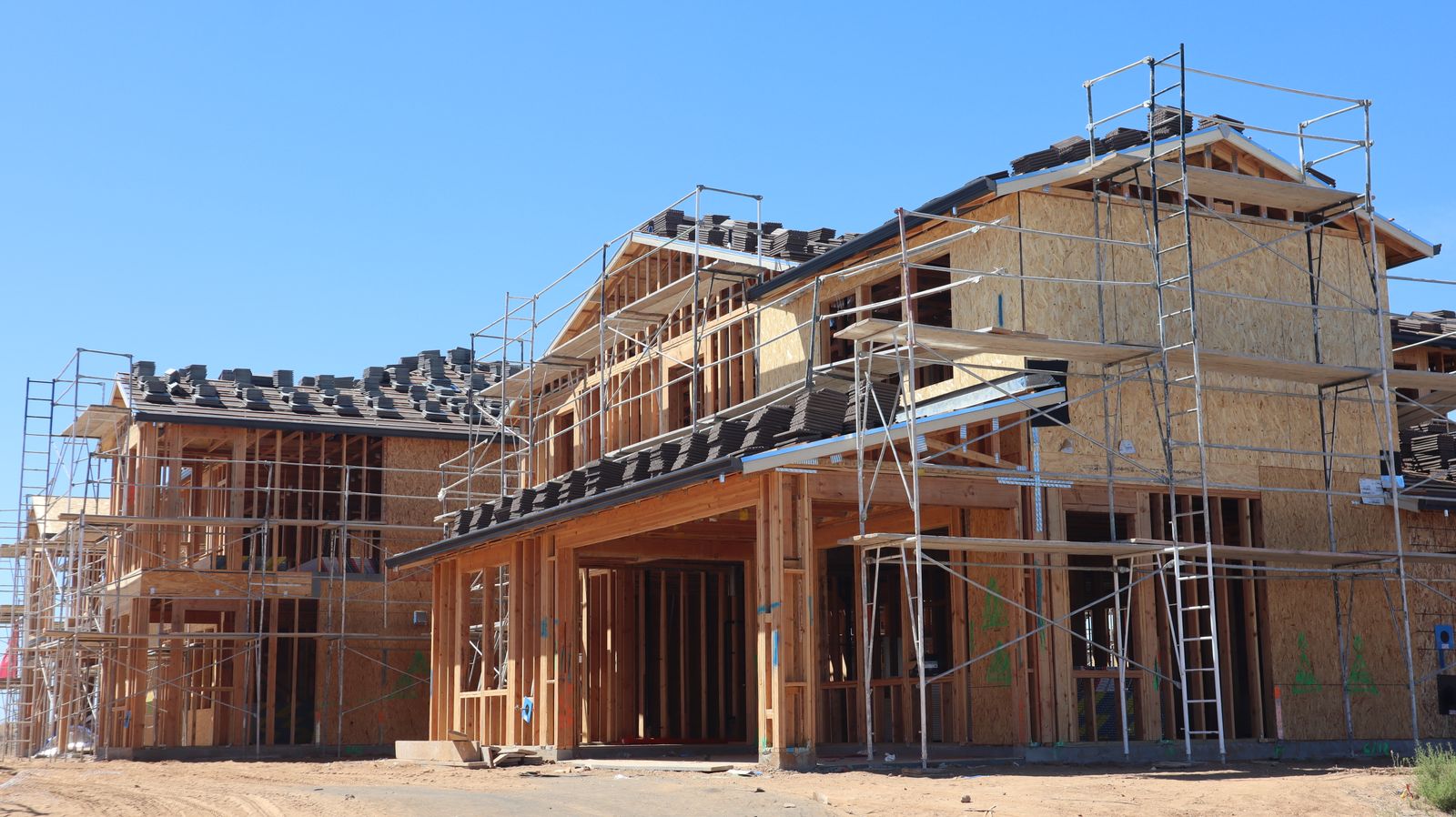
The Planning Act 2026 and the Natural Environment Act 2026 became law on 30 September 2026. Plenty of headlines said the Resource Management Act had been replaced. For an Auckland homeowner, that's misleading. The RMA still governs resource consents and enforcement, and the Auckland Unitary Plan still sets the rules for your site.
The actual change is narrower. From 30 October 2026, an amended version of the RMA takes effect, and Auckland Council has to ignore a set of residential matters when it decides whether a home project needs consent and how to assess it. One of them, views from private property, matters to almost anyone with a neighbour. It isn't mentioned in Auckland Council's own public notice about the change.
Below: what the amendments say, who gains, who loses, and why your lodging date now matters. We're Servy, an Auckland home services booking app, and we write about the rules that come up around home and garden projects. We aren't planners or lawyers. Everything below is linked to the legislation or to Auckland Council, and anything that's our own reading is labelled as such.
The RMA isn't gone yet
The Planning Act 2026 received Royal assent on 30 September 2026. Schedule 1 of the Act sets up a "transition period" that starts one month after assent, on 30 October 2026. During that period, the Act says, "the RMA continues to apply subject to the amendments made to it in Part 2 of Schedule 12."
The new system arrives later. Over the transition, the Government issues national direction, regions prepare spatial plans, and councils write new land use plans. Only after that does the new law fully replace the RMA, on a date set by Order in Council. Auckland Council's RM reform notice puts that at "the next 3-4 years." The Act also has a backstop in section 2(8): any provision not yet in force four years after assent comes into force anyway. By our reading, that includes section 344, which repeals the RMA, so the RMA ends by 30 September 2030 at the latest.
Until then, if your project breaks a Unitary Plan rule, you still need resource consent, and you still need it before you start work. Council's notice says this plainly.
What council must ignore from 30 October
The core change is a new section 104(1A) in the RMA. When a council considers the effects of a district land use activity, it "must disregard" a list of matters. For residential activities, those are:
- the area of glazing
- the presence or absence of balconies
- the outdoor living space
- the internal layout
- the size of a residential unit
- the size of landscaped areas, except in relation to permeability.
These six don't apply where the matter relates to protecting historic heritage. If your house is in a heritage area or on a scheduled heritage site, council can still consider them.
The same subsection lists matters that apply to all district land use consents, not just homes. Two matter to households:
- "the type of residents to be housed in a new development"
- "views from private property".
The amendment goes beyond the final decision. Council can't ask for further information or commission a report about these effects (new section 92(2AA)). It must disregard them when deciding whether to publicly notify an application (section 95D) and when deciding who counts as an affected person for limited notification (section 95E). And under new section 76(6), a plan rule "must not require a resource consent for an activity solely because it relates to" one of these matters.
If your neighbour builds, your view no longer counts
Council's public notice leaves this change out, and it's the one most likely to catch neighbours off guard. Say your neighbour applies to add a second storey that blocks your harbour view. Until now, nothing in the RMA told council to leave the effect on your view out of its assessment. For applications lodged from 30 October, section 104(1A)(f) says council must disregard "views from private property." Under section 95E(2)(d), the lost view also can't be the reason you're treated as an affected person entitled to notice and a chance to object.
Section 104(1A) doesn't mention shading, sunlight, privacy from overlooking, building height, height in relation to boundary, or yard setbacks. As we read it, Unitary Plan standards on those matters still apply in full. A neighbour's extension that breaches the height-in-relation-to-boundary standard and puts your living room in shade can still need consent, and you can still be an affected person because of the shading. You just can't rely on the view.
The Act also repeals section 95A(9), the "special circumstances" ground for publicly notifying an application. Planning.govt.nz's summary of changes to the RMA confirms that councils no longer have to consider special circumstances for public notification, though the test still applies to limited notification.
If you're planning a project, your lodging date matters
The transitional rules turn on when your application is lodged:
- Lodged before 30 October 2026: Clause 18 of Schedule 1 says it "must continue to be processed and determined under the RMA as in force immediately before" the Act received assent. The old rules apply in full.
- Lodged on or after 30 October 2026: Clause 19 says it's processed under the RMA "as in force at the time the application is lodged", which means the amended version.
Auckland Council says the same thing in plain language: applications lodged after the changes take effect "will be considered against the new, reduced provisions."
Suppose a deck, sunroom or extension would shrink your outdoor living space or landscaped area below the Unitary Plan minimum, and that's the only reason you need consent. Lodged on 29 October, the application is assessed against those rules. Lodged on 30 October, council has to disregard those matters, and section 76(6) suggests the consent trigger itself shouldn't apply. If you're close to lodging and that's your only breach, it's worth asking your designer or planner whether waiting a few weeks changes the outcome.
If your application is already in, the old rules apply to it. Whether withdrawing it and lodging a new one makes sense depends on the fees already spent and how far processing has got. That's a question for a planner, not a blog post.
The rules are still written in the Unitary Plan
If you open the Auckland Unitary Plan today, you'll still find outdoor living space and landscaping standards. The amendments don't delete them. Instead, the Act gives councils two tools.
New section 76A lets a council amend its district plan during the transition to remove or modify provisions that deal with these matters, without the usual plan-change process. Auckland Council says it "has started to develop the methodology for identifying the provisions that need to be removed or modified" in the Unitary Plan and the Hauraki Gulf Islands District Plan, with more information to come on the Auckland Design Manual.
New section 104AA creates an "alternative permitted activity pathway." Council can give written notice that an activity is permitted even though it doesn't comply with a rule on one of these matters, either after you apply or on its own initiative. If you've already applied, the application is returned and doesn't need to be processed. The notice lapses after five years if you don't go ahead.
Until council finishes that work, expect some uncertainty about which Unitary Plan standards still bite. Council's notice admits as much, saying the changes mean it "can no longer make sure housing developments meet the rules that have applied in the past." If a project depends on one of these matters, ask council directly whether it will issue a section 104AA notice before you pay for a full consent application.
What hasn't changed
Building consent is a separate law. Everything above is about resource consent under the RMA. Building consent comes from the Building Act 2004 and hasn't changed. A deck you could fall more than 1.5 metres from, even if it collapsed, still needs building consent, for example. Our guide to Schedule 1 building consent exemptions covers what you can build without one.
Protected trees are still protected. The six residential matters and private views have nothing to do with trees. Unitary Plan tree protection rules still apply, as do the RMA's enforcement provisions. Before cutting a neighbour's overhanging branches, check whether the tree is scheduled. Our overhanging branches guide explains how.
Granny flats have their own rules. The 70 m² minor dwelling exemptions that began on 15 January 2026 come from a separate national environmental standard and a separate Building Act amendment. Our granny flat guide covers both.
Fences and neighbour disputes. Fence height limits in the Unitary Plan aren't on the section 104(1A) list. The Fencing Act 1978 rules on sharing the cost of a boundary fence haven't changed either. See our boundary fence guide.
Existing consents carry over. A resource consent you already hold stays valid. Under clause 33 of Schedule 1 of the Planning Act, a land use consent granted under the RMA that is still current when the new system takes effect is treated as a consent granted under the new Act.
The key dates
| Date | What happens |
|---|---|
| 30 September 2026 | Planning Act 2026 and Natural Environment Act 2026 receive Royal assent |
| 30 October 2026 | Transition period starts. Amended RMA applies, including section 104(1A). Applications lodged from this date are assessed under the amended rules |
| During the transition | Auckland Council identifies and removes or modifies Unitary Plan provisions under section 76A. National direction, regional spatial plans and new land use plans are prepared |
| Date set by Order in Council | New system replaces the RMA, nationally or region by region |
| 30 September 2030 | Four-year backstop: any provision of the Act not yet in force, including the RMA repeal, comes into force (our reading of section 2(8)) |
Where to start
If you're planning a project, list every Unitary Plan rule it breaks. If every breach is about glazing, balconies, outdoor living space, internal layout, unit size or landscaped area (other than permeability), and you're not in a heritage area, the change probably works in your favour. Lodge on or after 30 October, or ask council about a section 104AA notice.
If your project breaks a height, height-in-relation-to-boundary, yard, site coverage or tree rule, you're under the same rules as before.
If you're a neighbour watching a development, focus on what council can still consider: sunlight and shading, height, setbacks, noise, earthworks and heritage. An objection about losing a view will now be disregarded by law.
None of this replaces advice on a specific site. A planner can tell you how council is applying the new rules in practice, which will become clearer over the next few months as Auckland Council publishes its methodology.